Understanding Payout Ratio
Payout ratio is the percentage of a company's earnings paid out as dividends. It measures how much of profits go to shareholders versus being reinvested.
The Formula
Payout Ratio = (Dividends per Share ÷ Earnings per Share) × 100
What Is a Safe Payout Ratio?
- <50%: Very safe - plenty of room for growth and downturns
- 50-70%: Moderate - healthy for mature companies
- 70-90%: Elevated - less room for error
- >90%: High risk - dividend may be cut if earnings drop
Exceptions
REITs and MLPs often have payout ratios above 90% by design - they're required to distribute most income. For these, check FCF payout coverage instead.
How Dividend.Direct Uses It
Payout ratio is a key component of our Quality Score. Stocks with ratios above 90% receive warning flags and lower scores.
See It in Action
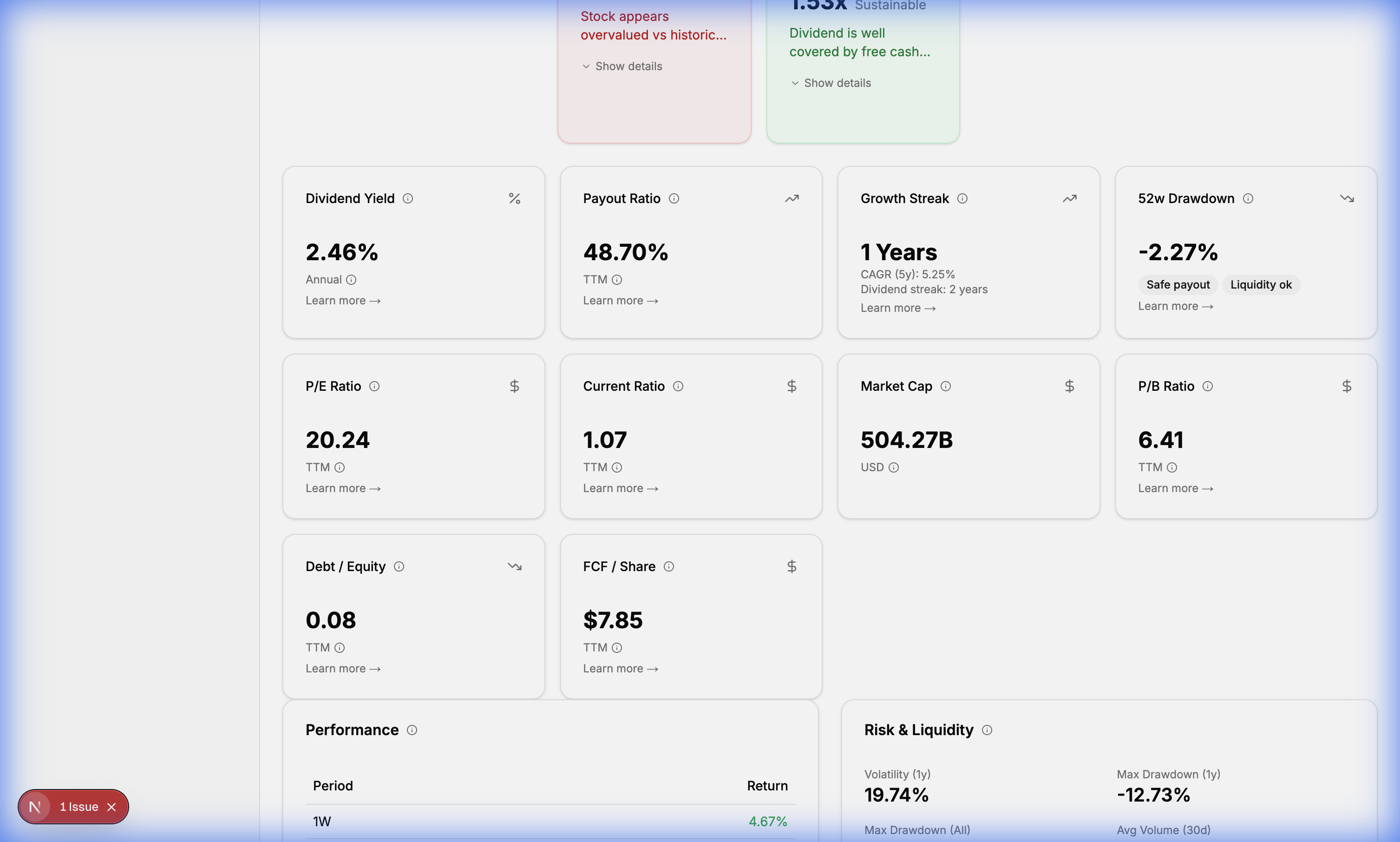
The Payout Ratio is displayed alongside yield and growth metrics to provide context on dividend safety.